American History Made
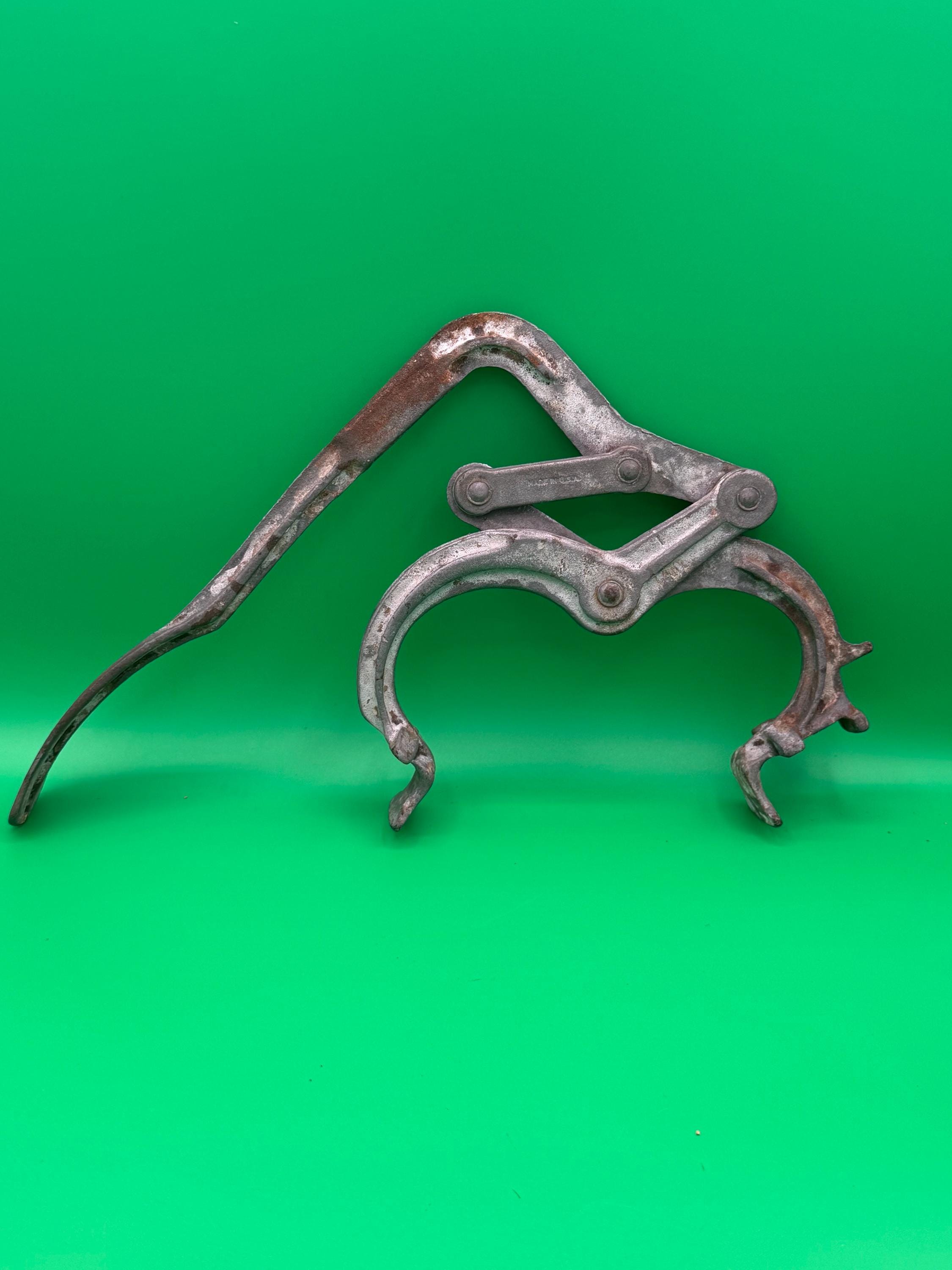
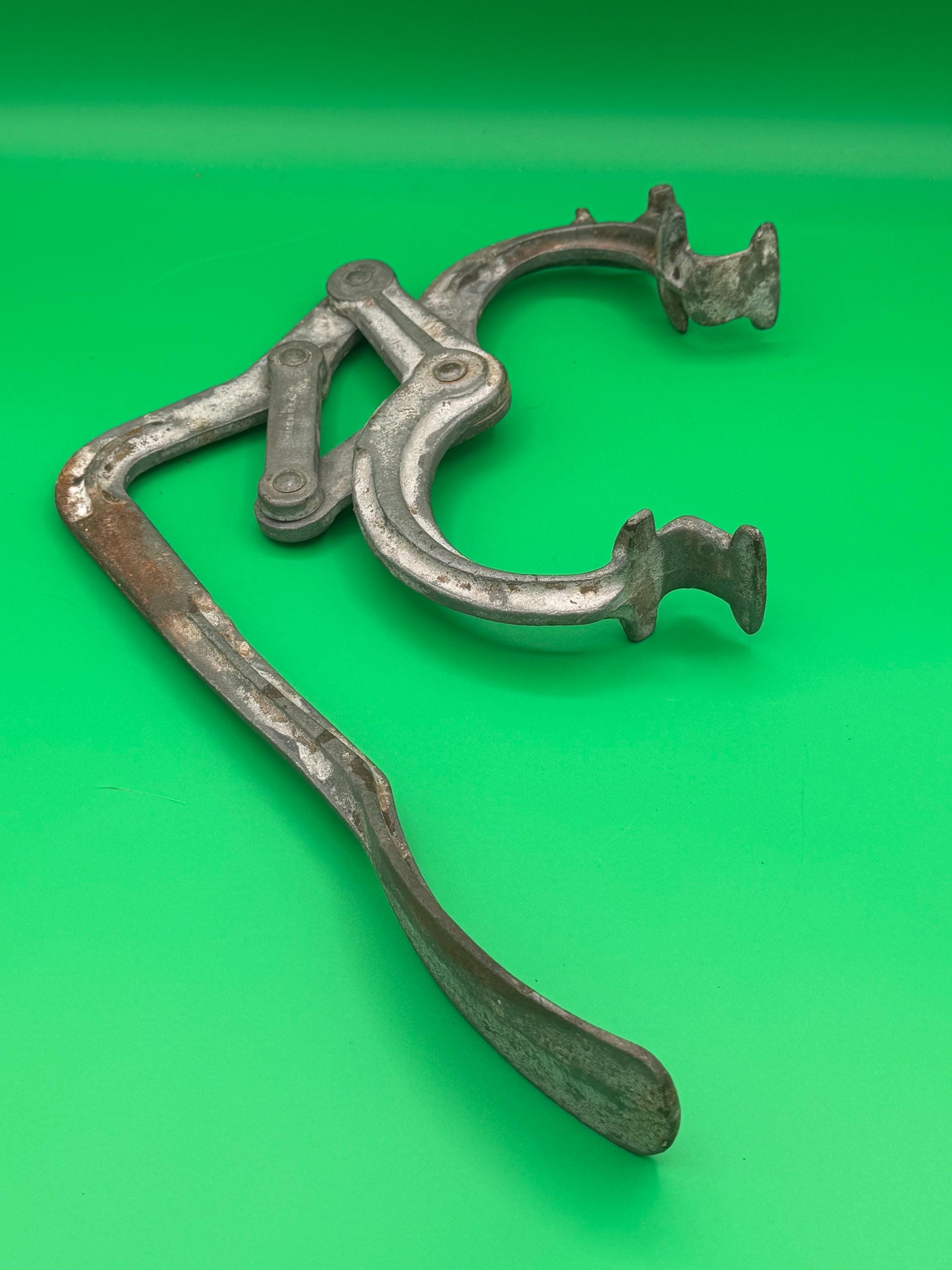
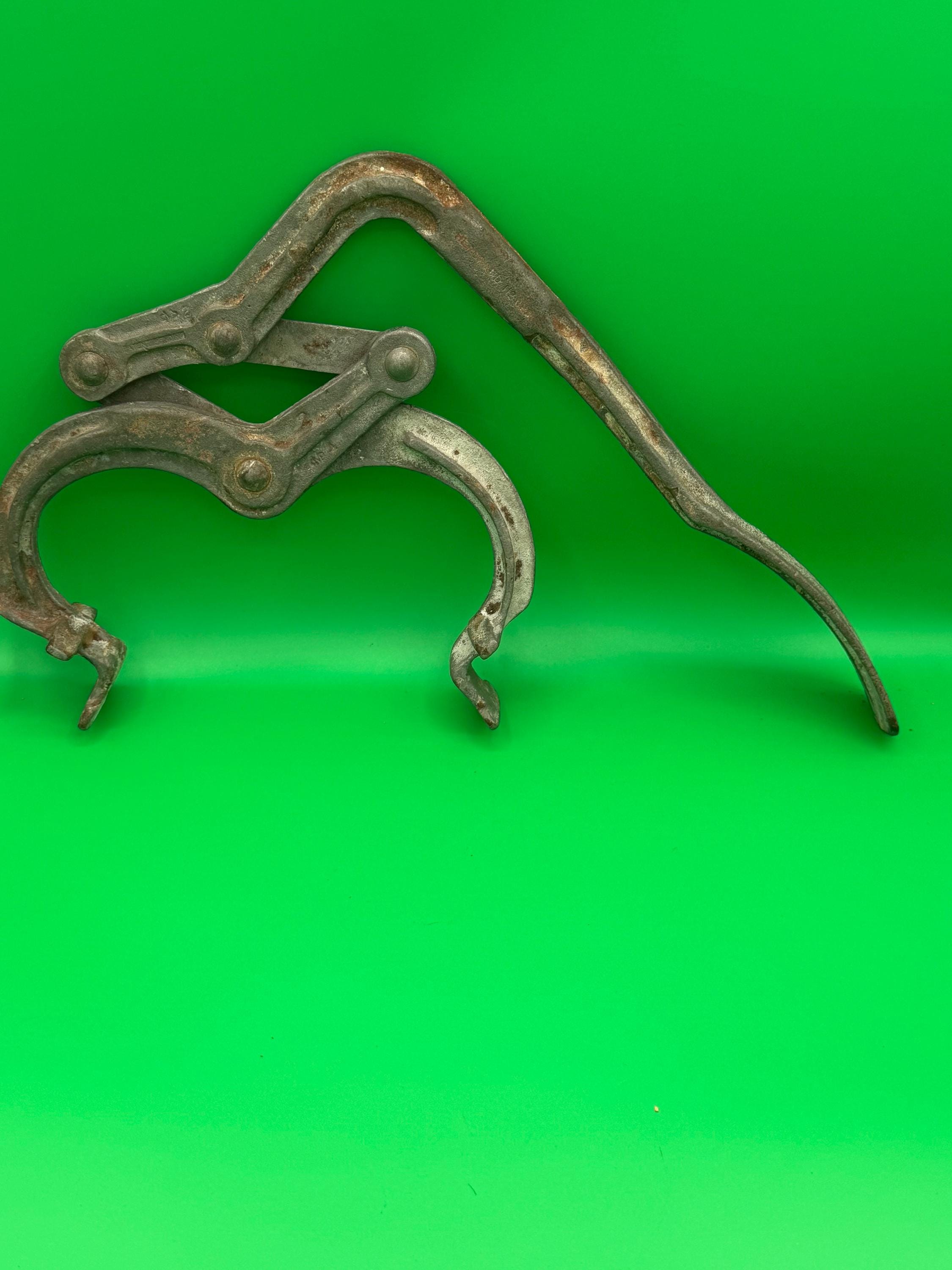
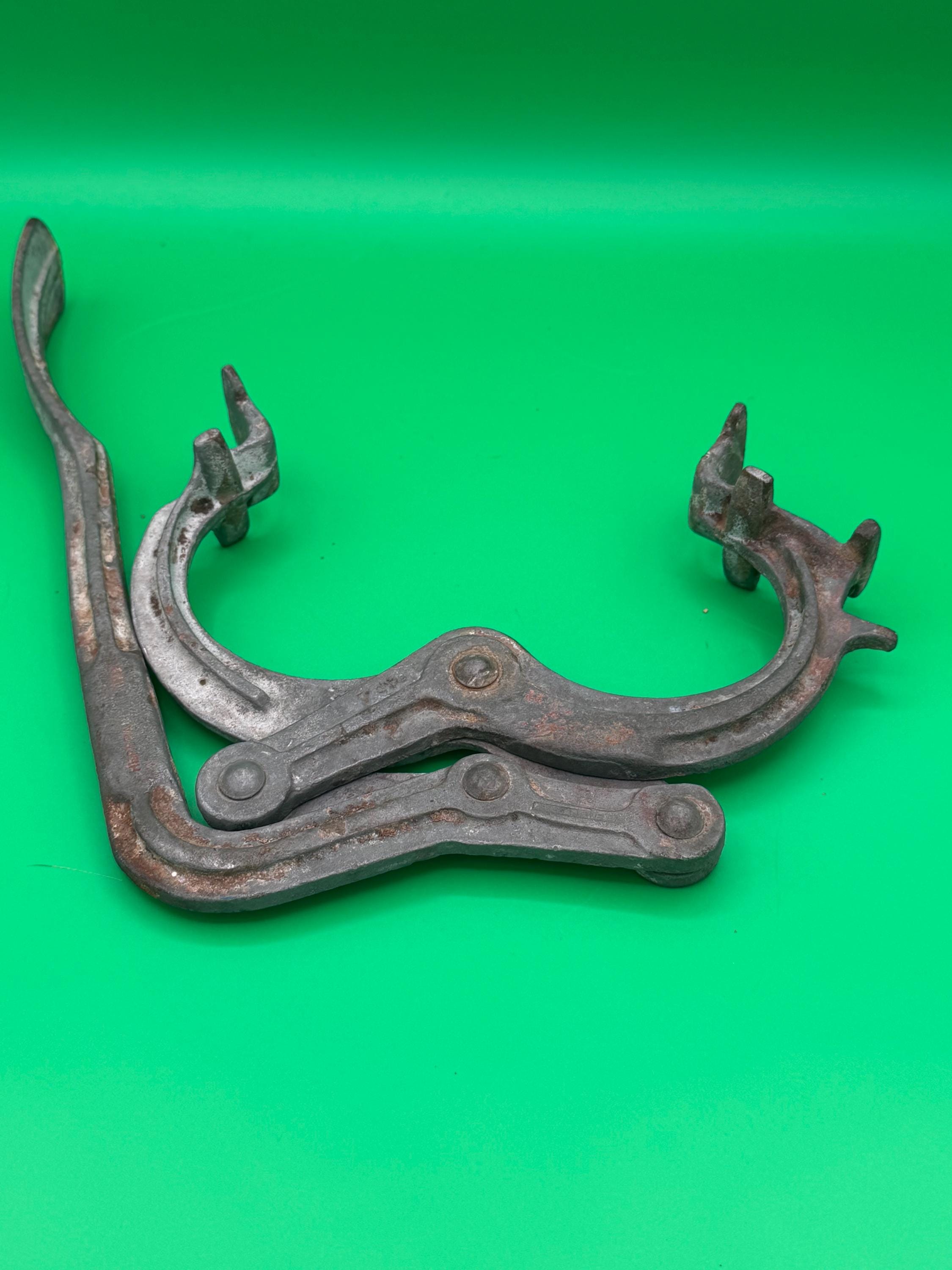
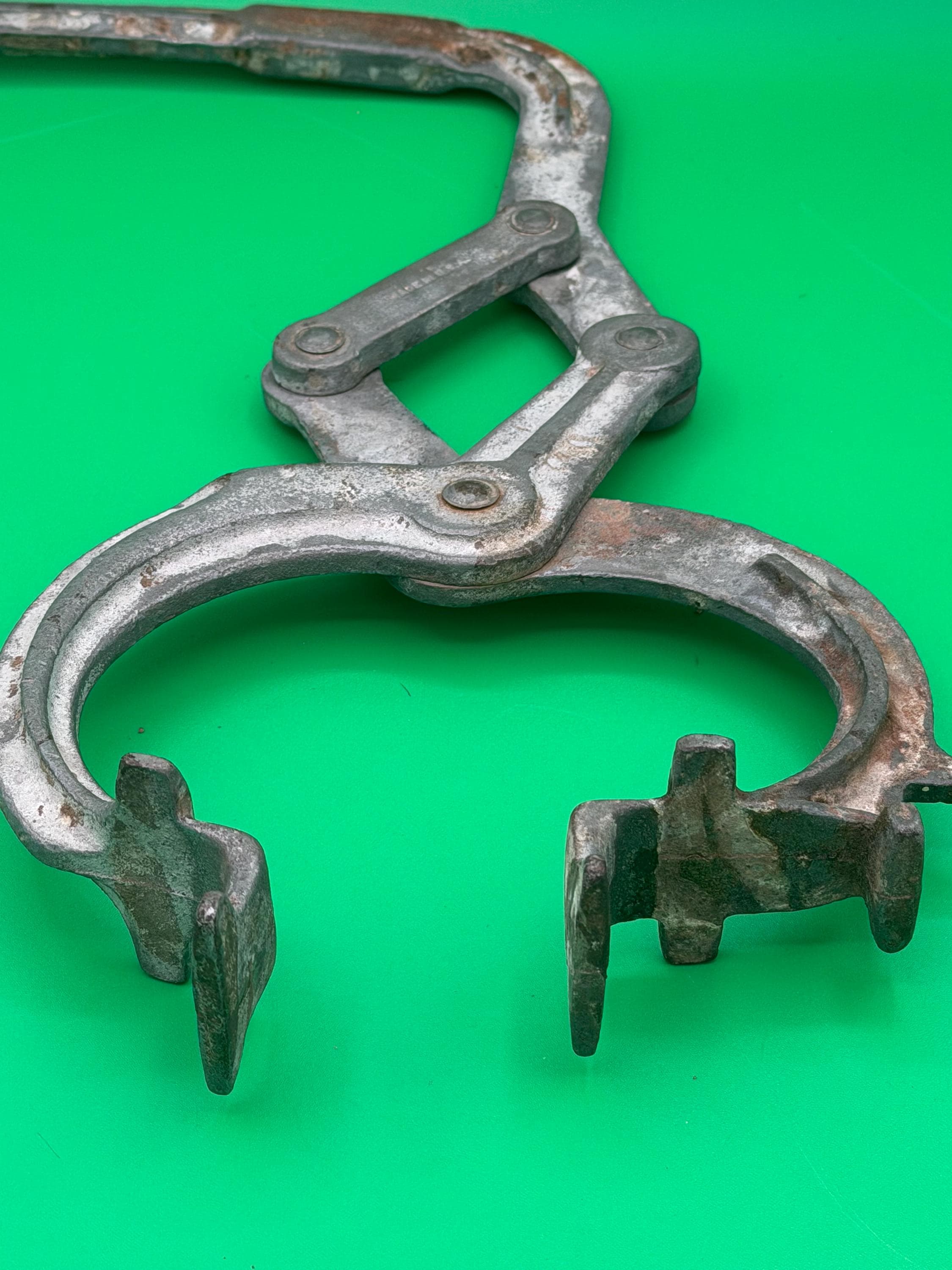
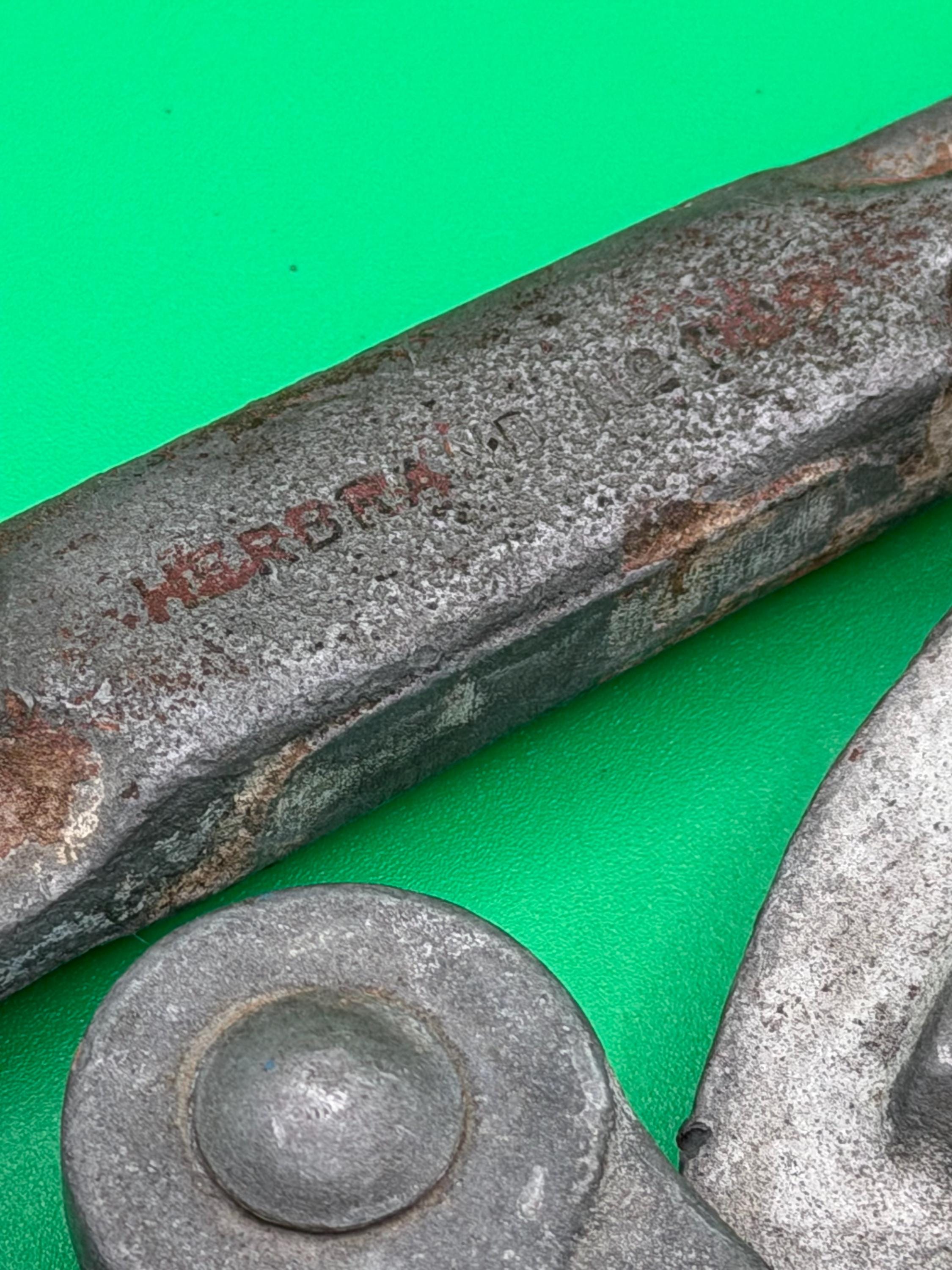
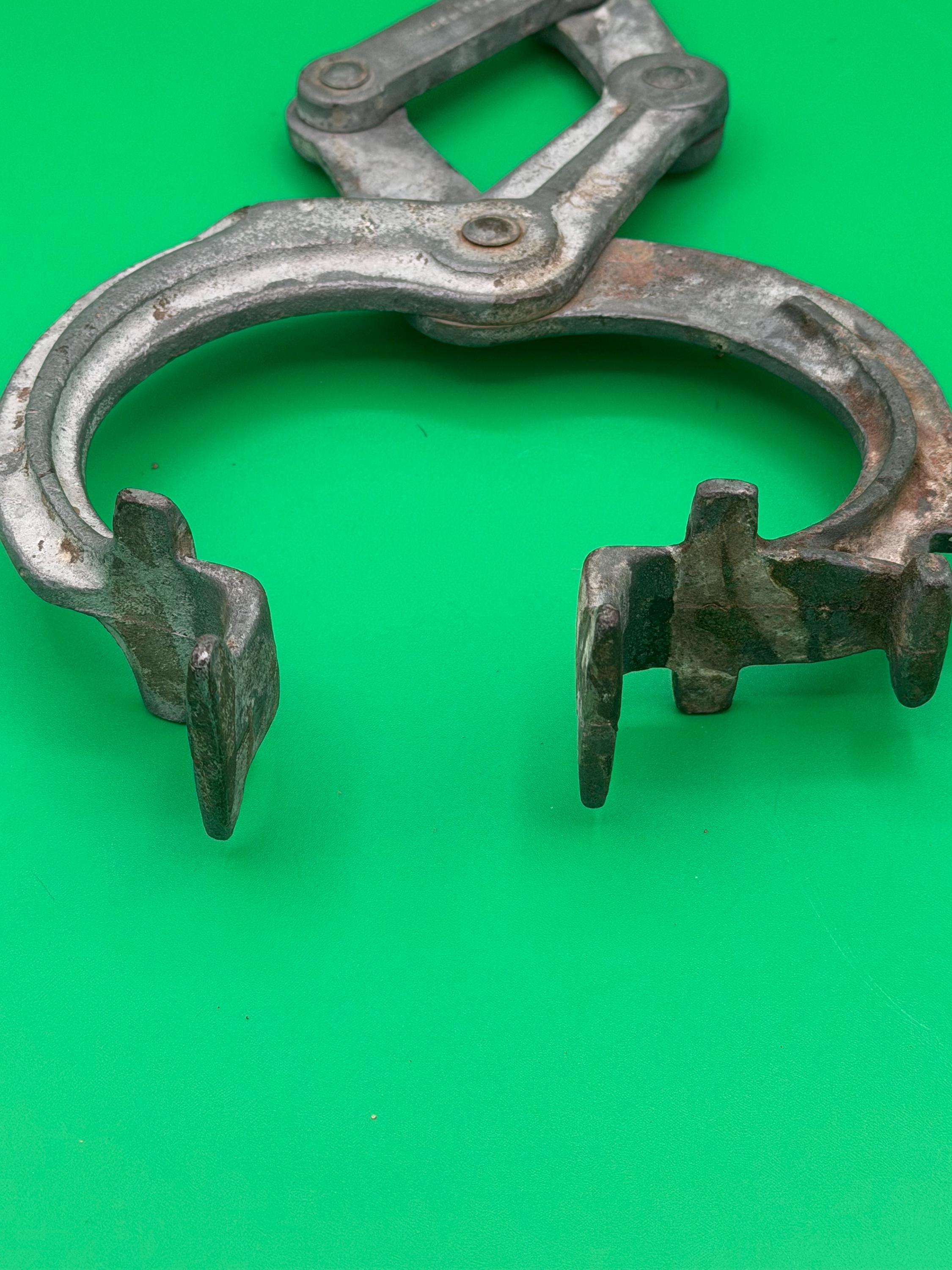
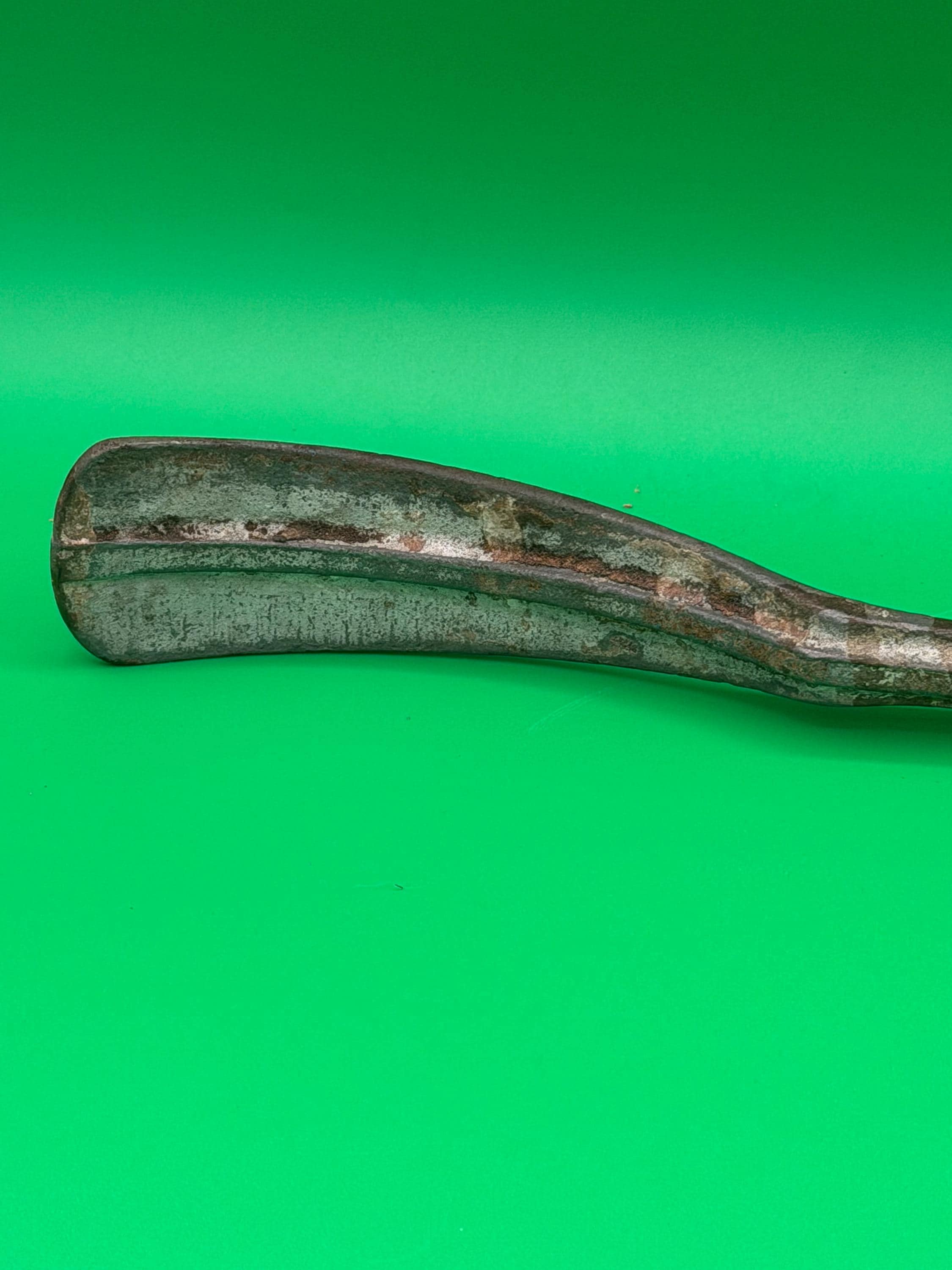
Dual Self Adjusting Tire Spreader-Herbrand Co, circa 1940s
$65.00
-
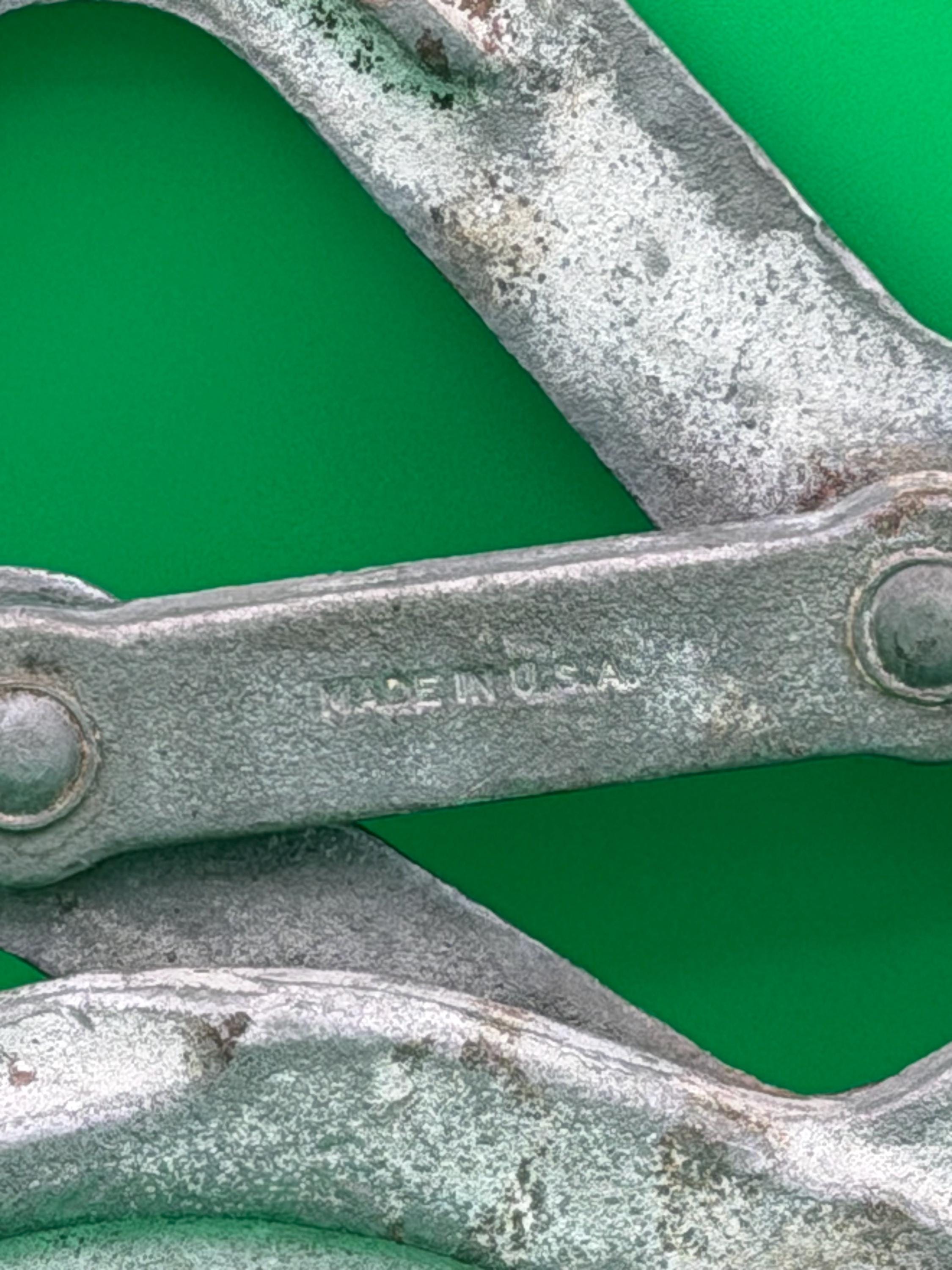
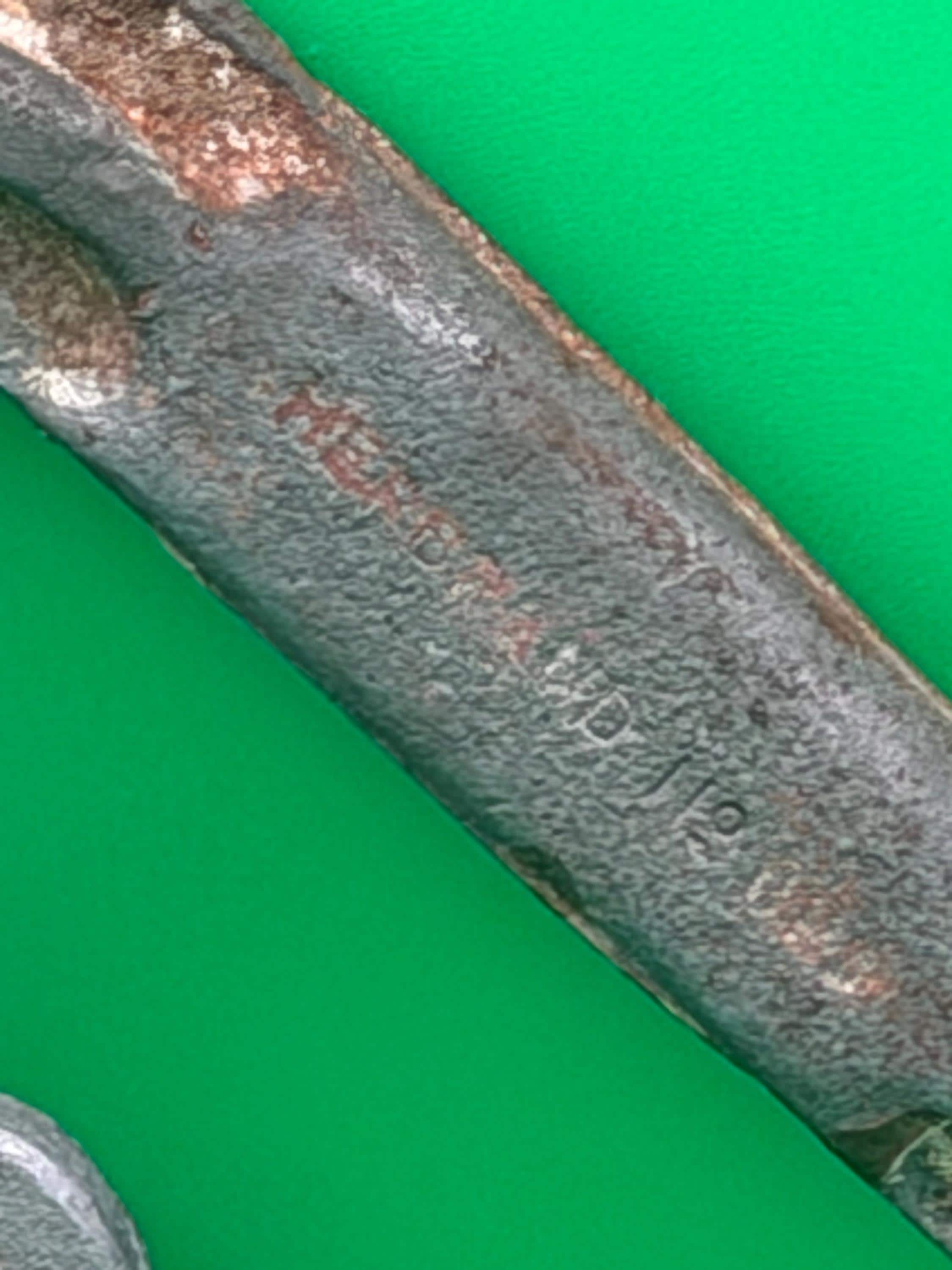
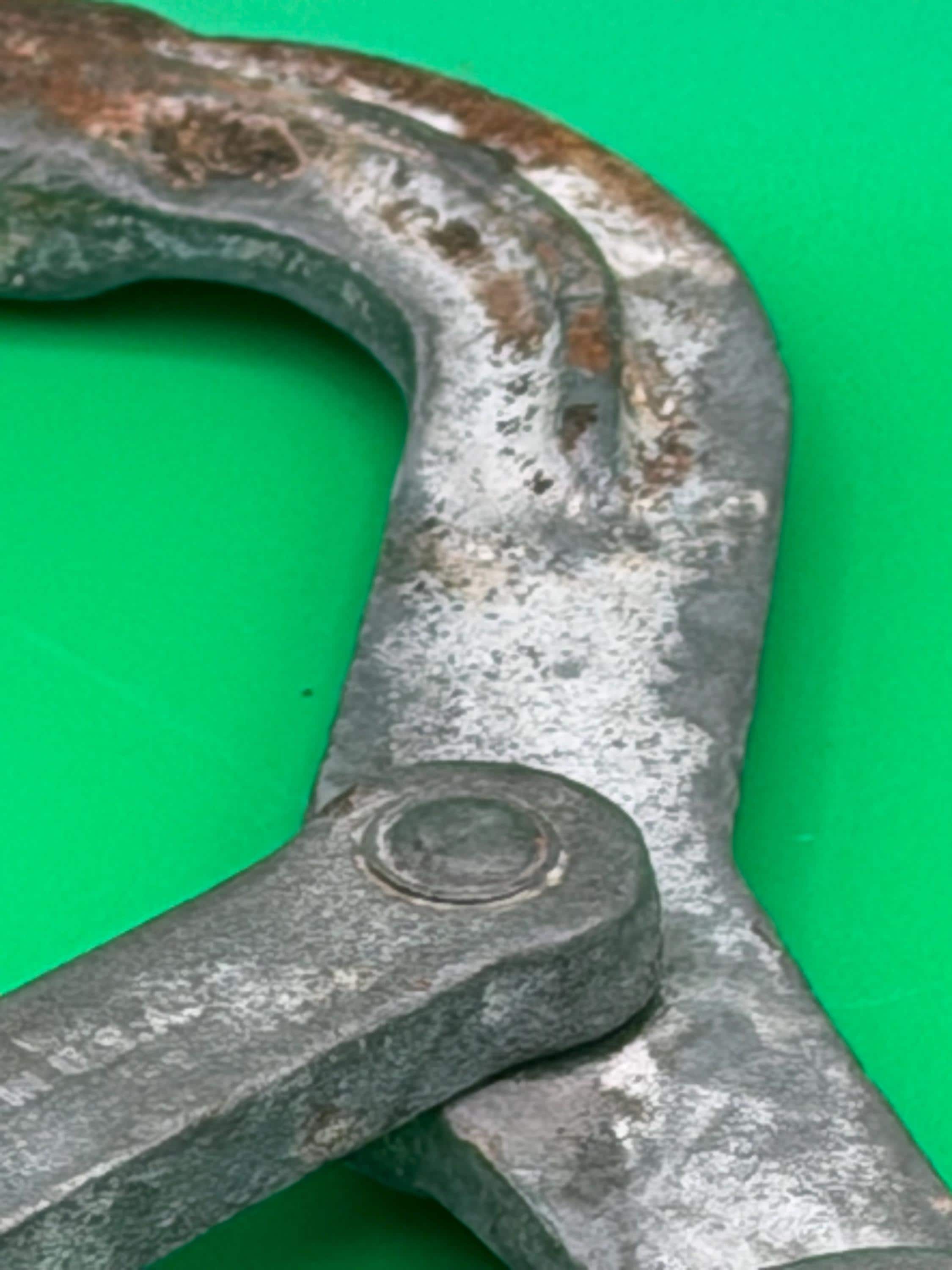
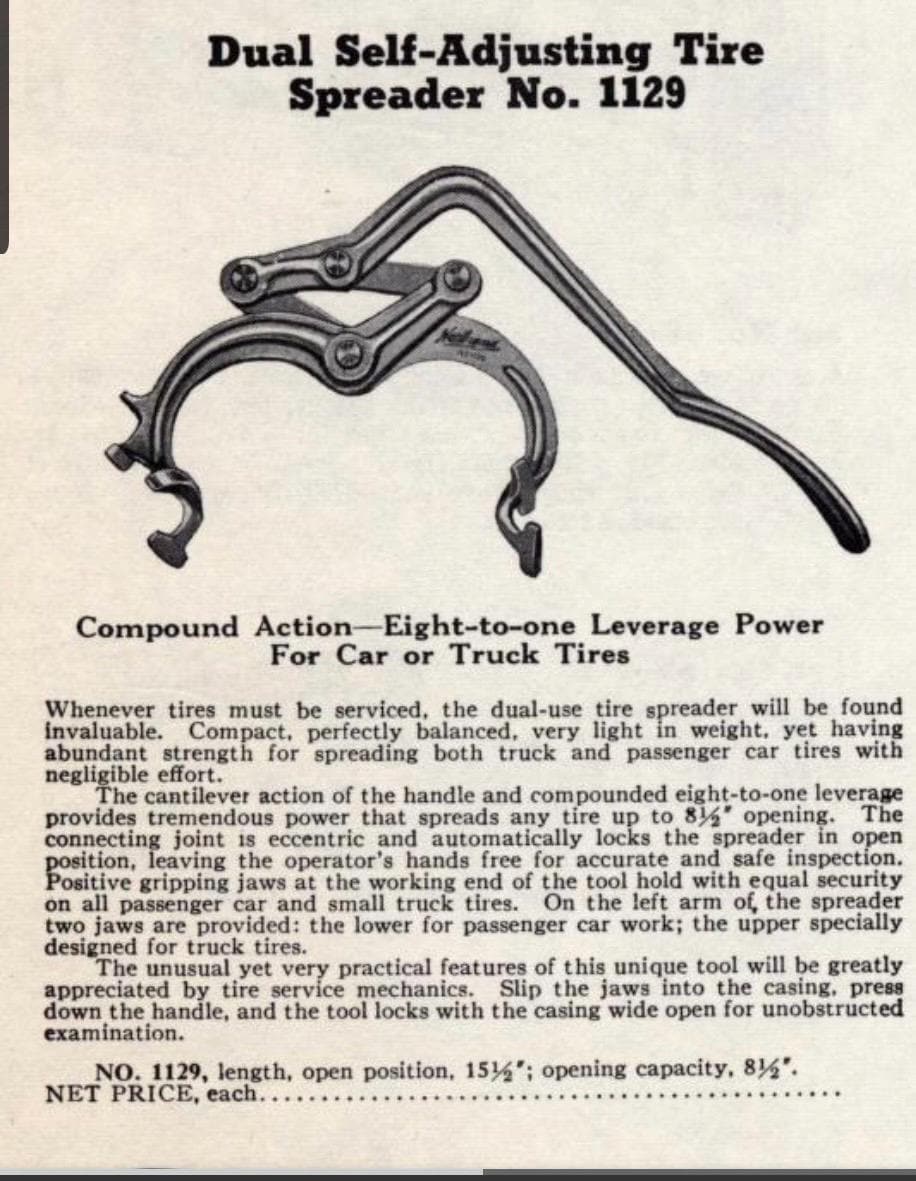
DetailsMade in U.S.A. (Fremont, Ohio) by pioneering forged metal tool manufacturer, The Herbrand Company. This malleable tool was developed approximately between 1940-1949. This tire spreader was catalog No. 1129 that was manufactured by Herbrand until 1962. This particular item is a “pre-patented” edition that was forged while Herbrand was awaiting their patent application to process and has the early stamped texted markings. The No. 1129 wouldn't receive its final patent number until the early 1950s. Unlike the earlier malleable cantilever spreaders for Ford Model T’s, the Herbrand No. 1129 could open 8-1/2” to be used on passenger car and light truck tires ranging from roughly 7.00-15 to 8.50-16.5. Also, a wide implement and flotation tire up to 10.50 inches wide because of Herbrand's No. 1129 has 8 to 1 "leverage power". During the 1940s and throughout the 50s and 60s, most tire stations were servicing several of these sizes in both bias-ply as well as the earlier radial tires. This tool would have been essential for tire changing in a service station or on a farm.
ABOUT HERBRAND COMPANY:
Ohio is the birthplace to some of the most notable pioneers in the forged metal tool industry. Brands like Cornwell Quality Tools, American Fork & Hoe, Warren Tool and Forge and of course…Herbrand, the inventors of Van-Chrome alloy steel sockets and drivers.
It all began in 1881 when inventors Jacob Herbrand, Charles Thompson, and J.B. Van Doren, formed a metal forging company in Fremont, Ohio. The trio invested everything into the manufacturing of Herbrand’s style of “fifth wheel” and “gear iron” for low hanging horse drawn buggies.
The Herbrand fifth wheel was crucial for improving the steering stability, strength, and durability of luxury horse-drawn buggies. It acted as a heavy-duty, pivotable, drop-forged platform connecting the front axle to the carriage frame, significantly reducing damage and improving handling. Along with custom hand-forged gear irons and drop forgings (springs), the Herbrand name quickly became the gold standard of the American carriage trade from coast to coast. Most all stylish buggies were outfitted with Herbrand Carriage Forgings during the early 1880s, but the business trio hit a shocking, but brief setback. Sadly, in 1884 Jacob Herbrand passed away. Charles assumed the position of president and general manager and under his leadership, Herbrand Company manufactured bicycles, automotive wrenches, and safety razors coming into the 20th century.
With the invention of assembly production and price decrease of the Model T Ford, America was driving and no longer galloping. In response to the growing automobile industry, by 1920 most all forged steel tool manufacturers primarily committed their production to making the tools required to service Fords. Herbrand’s Ford Model T tool kit was often supplied in a cloth roll and was essential for field repairs and maintenance. Key items included a cast-iron screw jack with handle, tire pump, two tire irons, pliers, oil can, adjustable wrench, hubcap wrench, and a specialized spark plug/cylinder head nut wrench.
It is the socket and ratchet category that the company truly made them superior with the 1929 invention of the Van Chrome Line of Multi-Hex (12-point) design.
Herbrand’s Van Chrome Tools were specialized alloy steel tools (chrome-molybdenum) which were stronger than previous carbon steel alternatives.
Herbrand’s catalog of hundreds of tool variations in “V-Chrome” was popular with traveling salesman (drummers) and suppliers like Western Automotive and Montgomery Wards carried Herbrand V-Chrome as their value line of handyman tools. Herbrand lost their independence when they sold their company and name to a tool manufacturing group who closed the Fremont, Ohio factory in 1962 and only continued their catalog sales in their Canadian tool market. The designs of tire spreaders like the Herbrand No. 1129 fell to extinction quickly later in 1962, with the Italian invention of the first wheel-clamp style tire changers that utilized air powered mechanics. Now, the once speedy spreader No. 1129 from the Herbrand Company is a memory.
Along with the pictures in this listing’s photo gallery, there is a catalog entry (July 1961) of Herbrand’s No. 1129 for sale ad. It gives an amazing feature and benefit description of this timeless invention.
Operational and patina is great for 70+ years in age. Weighs 3 pounds 7 ounces. The “open position” length is approximately 15-1/2”. Purchase now collectors...or lament later!
MemoryLaneVintiques sanitizes all glassware, glazed pottery, jewelry and resin cast items before packing for shipment....100% Guaranteed!
STANDS IN PHOTOS NOT INCLUDED WITH PURCHASE OF THIS ITEM!
ETSY INTELLECTUAL PROPERTY POLICY
As a venue for artists, designers, and makers, Etsy takes intellectual property rights very seriously. We comply with intellectual property laws and industry best practices in order to maintain the integrity of our creative marketplace. This Intellectual Property Policy explains how we address allegations of infringement: how authorized parties can submit reports of infringement regarding content on our marketplace, and how Etsy sellers can respond when their listings or shops are affected by a report.
ANY COPY AND PASTING OR PLAGIARIZING OF MATERIAL
ON MEMORYLANEVINTIQUES IS SUBJECT TO ETSY INVESTIGATION AND PENALTIES!
MemoryLaneVintiques researchers also protect our shop from Intellectual Property Theft by researching for violators of our material. Be respectful!
Chad & Jennifer Johnston (August 2024) -
Shipping & Policies
Related Products